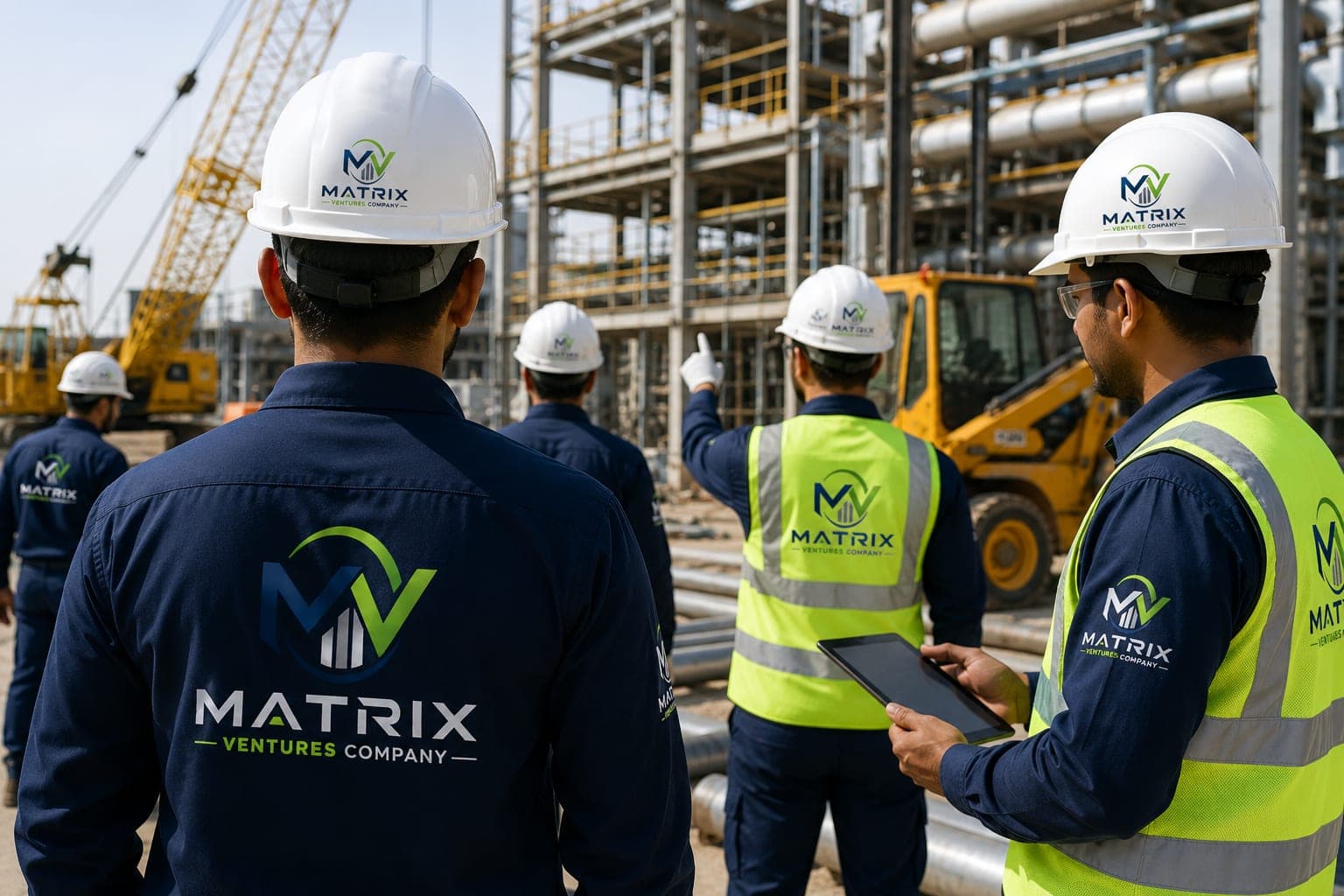
Engineering & Construction
Civil, Mechanical, Electrical & Instrumentation Construction & Maintenance Services
Multi-discipline construction and maintenance across civil, mechanical, electrical and E&I works.
View details
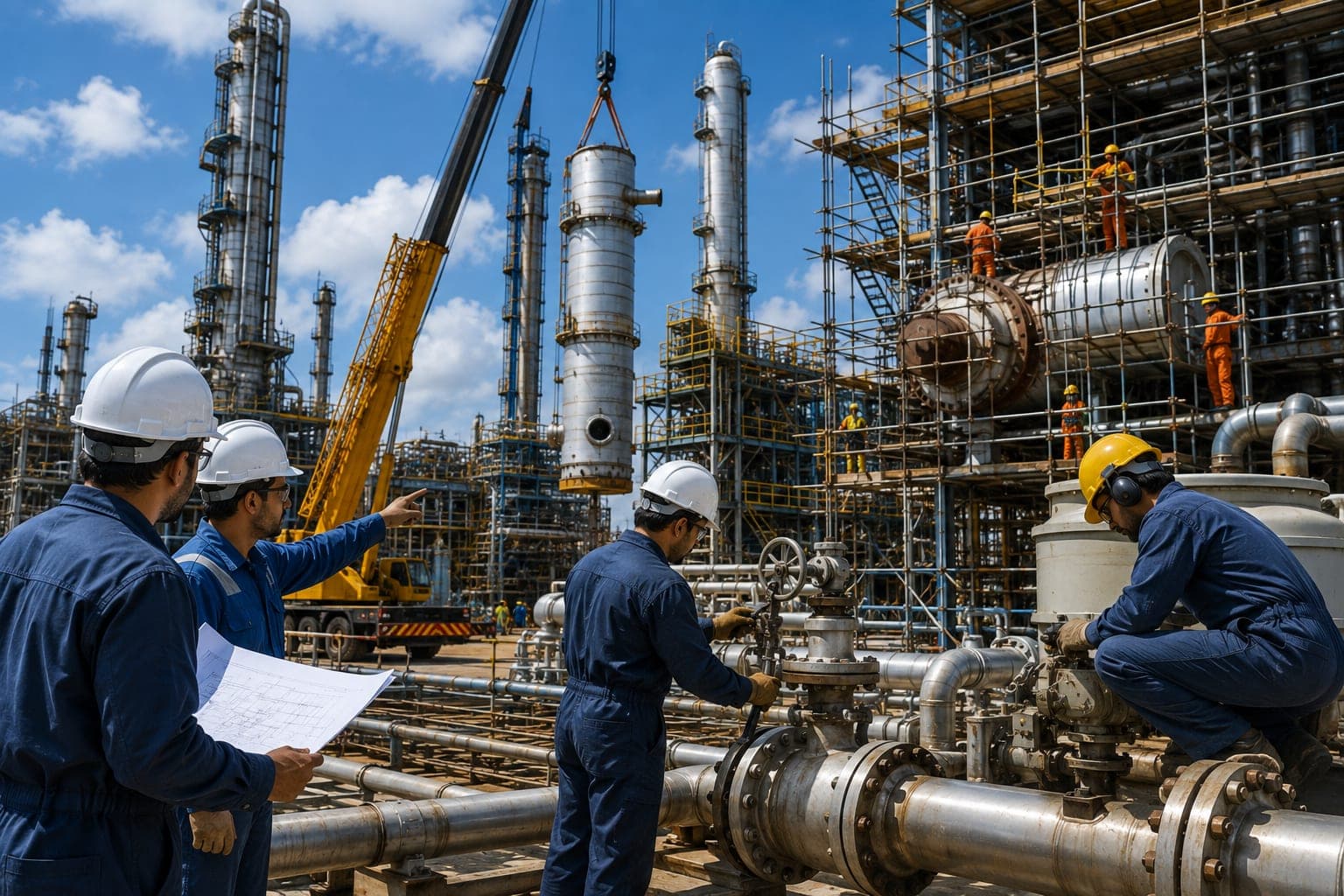
Plant construction and maintenance, plus planned shutdown and turnaround execution.
Shutdowns and turnarounds are measured in hours, not days. We plan the work package by package, mobilise the trades and equipment needed to run parallel fronts, and hand the plant back on schedule — with the same teams available for routine maintenance between events.
A shutdown or turnaround is a planned period during which a process unit is taken offline so that work which cannot be performed while it is running — internal inspection, equipment overhaul, tie-ins and catalyst or lining replacement — can be completed. Turnaround services cover the planning, resourcing and execution of that window, together with the routine plant construction and maintenance carried out between events.
A turnaround is the single most expensive maintenance event an operator undertakes, and most of that cost is not the work — it is the production forgone while the unit is down. A day saved is a day of output recovered; a day lost is unrecoverable. That asymmetry is why turnarounds are planned in far more detail than their duration would suggest, and why scope discovered after the unit is opened is so damaging to the schedule.
Cyclical turnarounds on crude, reforming, cracking and utilities units, where the critical path usually runs through vessel entry and heat exchanger work.
Boiler and turbine outages, condenser cleaning and pipework renewal scheduled outside peak demand.
Annual stoppages combining preventive maintenance, equipment replacement and line modification.
Wear-part replacement, chute and liner renewal and structural repair in high-abrasion service.
Steam, cooling water and compressed air systems taken down in coordinated windows across a site.
Tank cleaning, internal inspection and floor or roof repair under API 653 driven intervals.
The work list is built from inspection findings, deferred maintenance, engineering change requests and statutory requirements, then challenged item by item: does this genuinely require the unit to be down? The scope is frozen at an agreed date, after which additions require formal approval — the single most effective control on turnaround duration.
Each job is broken into activities with durations, trades, equipment and access requirements, then networked to expose the critical path. Parallel work fronts are designed deliberately, and manning is levelled so that peak demand does not exceed what the site can actually accommodate and permit.
Materials, spares and rental equipment are received and staged before the unit comes down. Scaffolding, temporary services and laydown are pre-built where the live plant allows. Work packs — drawings, permits, method statements, isolation lists — are issued to supervisors in advance, not written during the outage.
The unit is depressurised, drained, purged and isolated under the operator's permit system, with blinding registers and lock-out tag-out applied and verified. Gas testing precedes any entry or hot work. This phase is short but it gates everything after it, so it is planned as carefully as the mechanical work.
Mechanical, civil, electrical and specialist trades work simultaneously under coordinated permits, with progress measured against the schedule at shift intervals rather than daily. Discovery work — findings once equipment is opened — is assessed against the critical path before it is authorised, so that its schedule impact is a decision rather than a surprise.
Equipment is boxed up against a verified punch list, blinds are removed against the register, systems are pressure tested and leak checked, and instrumentation is loop checked. Teams remain available through start-up to deal with the leaks and trips that typically appear in the first hours of running.
Turnarounds need several times the routine headcount for a few weeks. Recruiting, mobilising, inducting and accommodating that peak — then releasing it — is a logistics exercise, and it is the part operators are least equipped to run in-house.
Mechanical, civil, electrical, instrumentation, scaffolding, insulation, painting and cleaning under one contract means one interface with the permit office and no idle standby while a second contractor is called out.
Schedules are built with contingency positioned where discovery work is statistically likely — exchanger bundles, vessel internals, corroded pipework — rather than as an undifferentiated allowance at the end.
The same teams available for routine maintenance between turnarounds already know the plant layout, the permit regime and the equipment history — which shortens the learning curve when the next outage begins.
Turnarounds concentrate simultaneous operations, night shifts and unfamiliar crews — the conditions under which incidents cluster. A single safety plan, supervisor stop-work authority and controlled SIMOPS assessment are the counterweight.
| Criterion | Split discipline packages | Single accountable contract |
|---|---|---|
| Timing of the outage | Set by the failure, often at peak demand | Chosen around production and market conditions |
| Spares availability | Ordered after failure, at expedited cost | Staged on site before the unit comes down |
| Labour cost | Emergency mobilisation at premium rates | Planned mobilisation with levelled manning |
| Scope of work | Limited to the failure; adjacent defects remain | Bundled so one outage clears the backlog |
| Production loss | Unbudgeted and open-ended | Forecast, budgeted and bounded by the schedule |
Industrial facilities within scope of the High Commission for Industrial Security are subject to its safety and security directives, covering matters such as fire protection provision, emergency response arrangements and the vetting and control of contractor personnel entering the plant.
All work inside a live or shut-down process facility runs under the operator's own permit regime: isolation and blinding certificates, confined space entry permits, hot work permits and gas testing. Permit throughput is a genuine schedule constraint and is planned as a resource, not assumed to be unlimited.
Inspection intervals and acceptance criteria for pressure equipment are typically set by API 510 for pressure vessels, API 570 for piping and API 653 for storage tanks, often applied through a risk-based inspection programme. These intervals are frequently what determines when a turnaround must occur at all.
Major Saudi operators maintain their own engineering standards and construction safety requirements which take precedence over general practice where the contract invokes them. Welding procedures, materials, inspection and safety controls are executed to those documents when they apply.
Turnarounds generate catalyst, sludge, spent chemicals and contaminated water that fall under Saudi environmental regulation and the oversight of the National Center for Environmental Compliance. Disposal routes and licensed contractors are arranged before the waste is created, since storage on site is usually the binding constraint.
Codes and standards this discipline is routinely held to. The standards applied on any given project are those named in the contract.
The terms overlap and are often used interchangeably. In common usage a shutdown is any planned stoppage of a unit, while a turnaround refers to the larger, cyclical event in which the unit is opened for internal inspection and major overhaul. A turnaround is a shutdown; not every shutdown is a turnaround.
For a major event, preparation typically begins many months ahead, because long-lead procurement, contractor mobilisation and scope challenge all need time. The practical test is not the calendar but the milestones: is the scope frozen, are long-lead items ordered, and are work packs issued? A turnaround that reaches its start date without those complete will absorb the shortfall in duration.
By assessing every finding against the critical path before authorising it. Work that is off the critical path can often be absorbed; work on it cannot, and the choice between extending the outage and deferring the repair belongs to the operator. Recording the finding, its assessment and the decision at the time is what makes the eventual schedule and cost position defensible.
The full mix: mechanical fitters, welders, riggers, civil trades, electricians, instrument technicians, scaffolders, insulators, painters and industrial cleaning crews, together with the supervision, QA/QC and safety staffing to run them. Trades that are typically subcontracted out — scaffolding and cleaning in particular — sit inside the same organisation and the same safety system.
Through controlled simultaneous operations. Permits in the same area are coordinated so hot work, lifting and confined space entry are not authorised in conflict; every worker is inducted to the site and the specific unit; supervisors hold stop-work authority; and gas testing precedes entry and hot work. Density of people is itself treated as a hazard when planning work fronts.
Yes. Teams remain on site through reinstatement, leak testing and the initial running period, when flange leaks, instrument faults and trips are most likely to appear. Demobilising at mechanical completion transfers those first-hours problems to an operations team that no longer has the trades to fix them quickly.
A great deal: preventive maintenance on rotating equipment with installed spares, external inspection, insulation and coating repair, on-line cleaning, valve maintenance where isolation allows, and much electrical and instrument work. Moving work out of the outage and into run-and-maintain is one of the most reliable ways to shorten the next turnaround.
Against the frozen scope and baseline duration, with schedule adherence, discovery work as a proportion of total work hours, safety performance, rework, and the stability of the unit after start-up. Finishing early against an inflated baseline is not performance, which is why the baseline itself has to be built from work content rather than expectation.
Engineering & Construction
Multi-discipline construction and maintenance across civil, mechanical, electrical and E&I works.
View details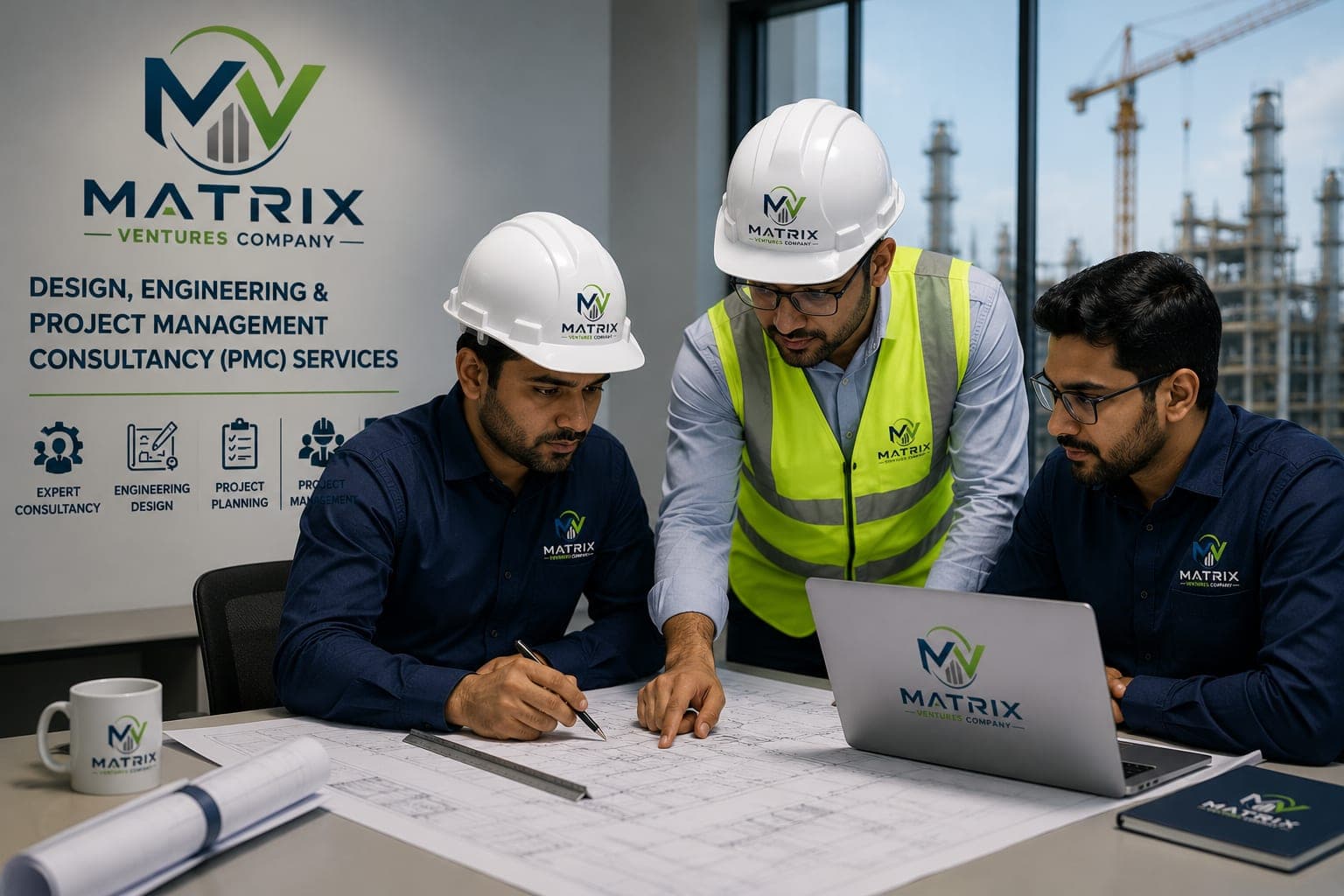
Engineering & Construction
Concept-to-completion design, detailed engineering and independent project management consultancy.
View details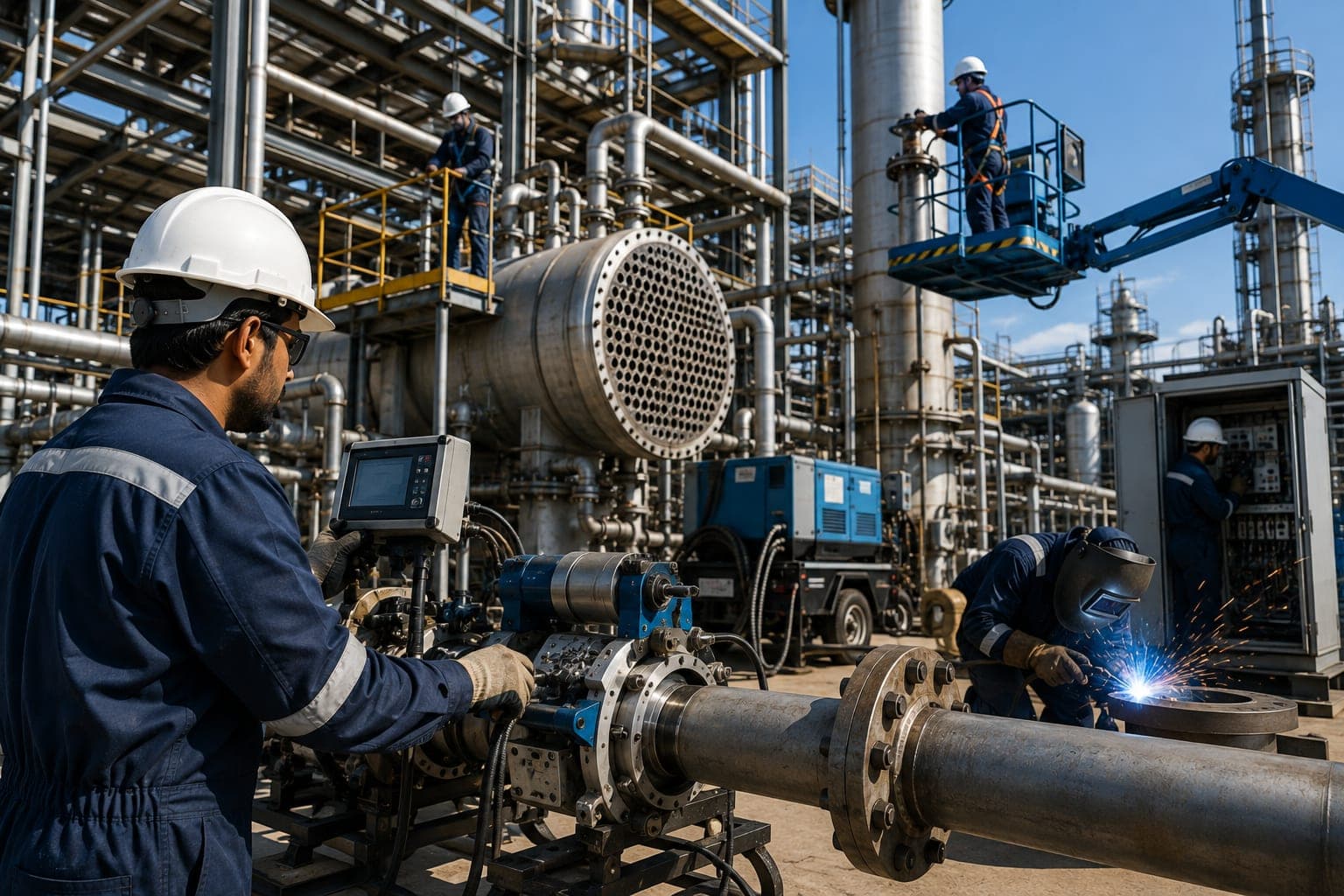
Engineering & Construction
Technique-led industrial services that require dedicated equipment and certified operators.
View details