Facilities & Support Services
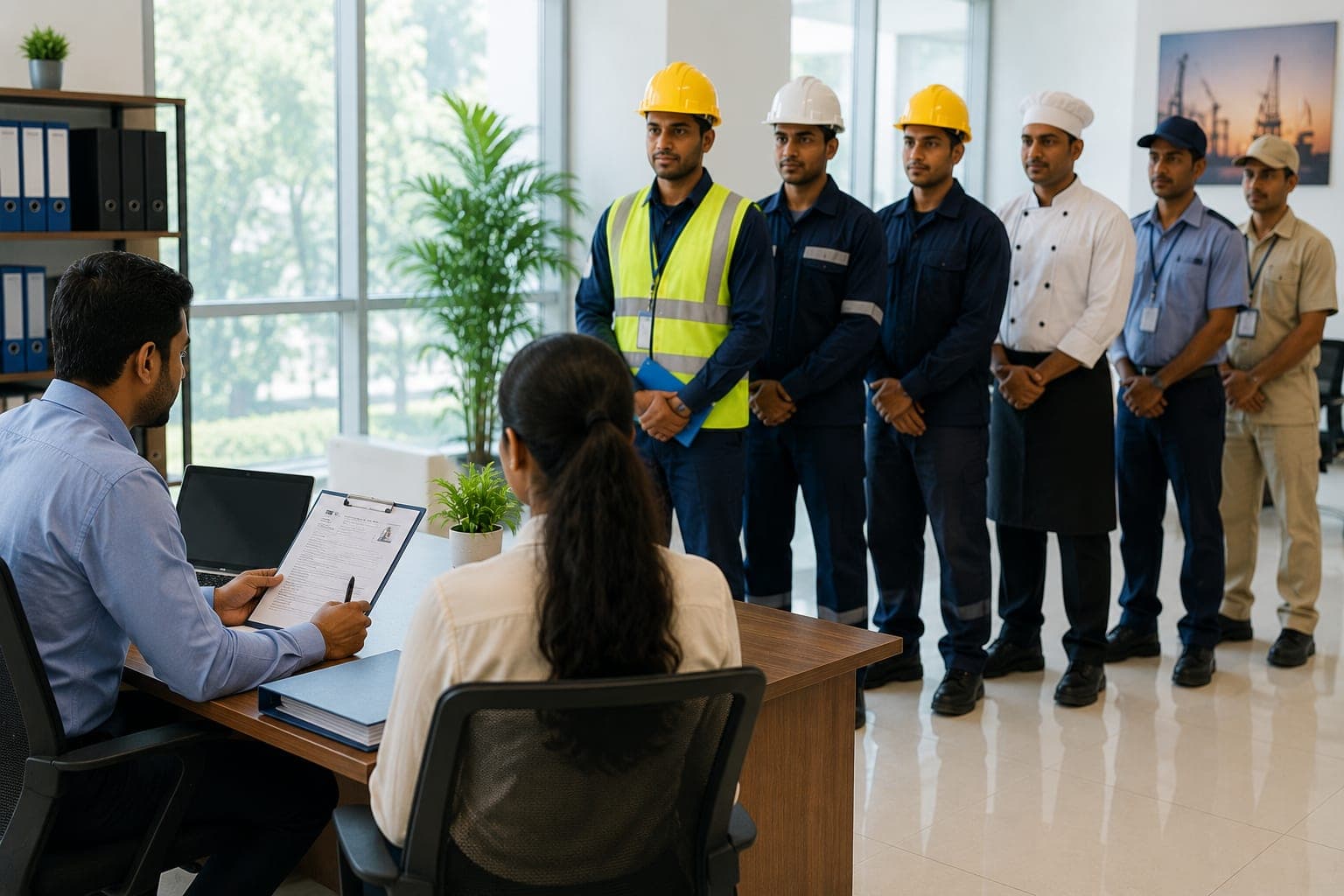
Human Resources & Manpower Supply Services
Sourcing, mobilisation and full sponsorship management of skilled and general manpower.
View details
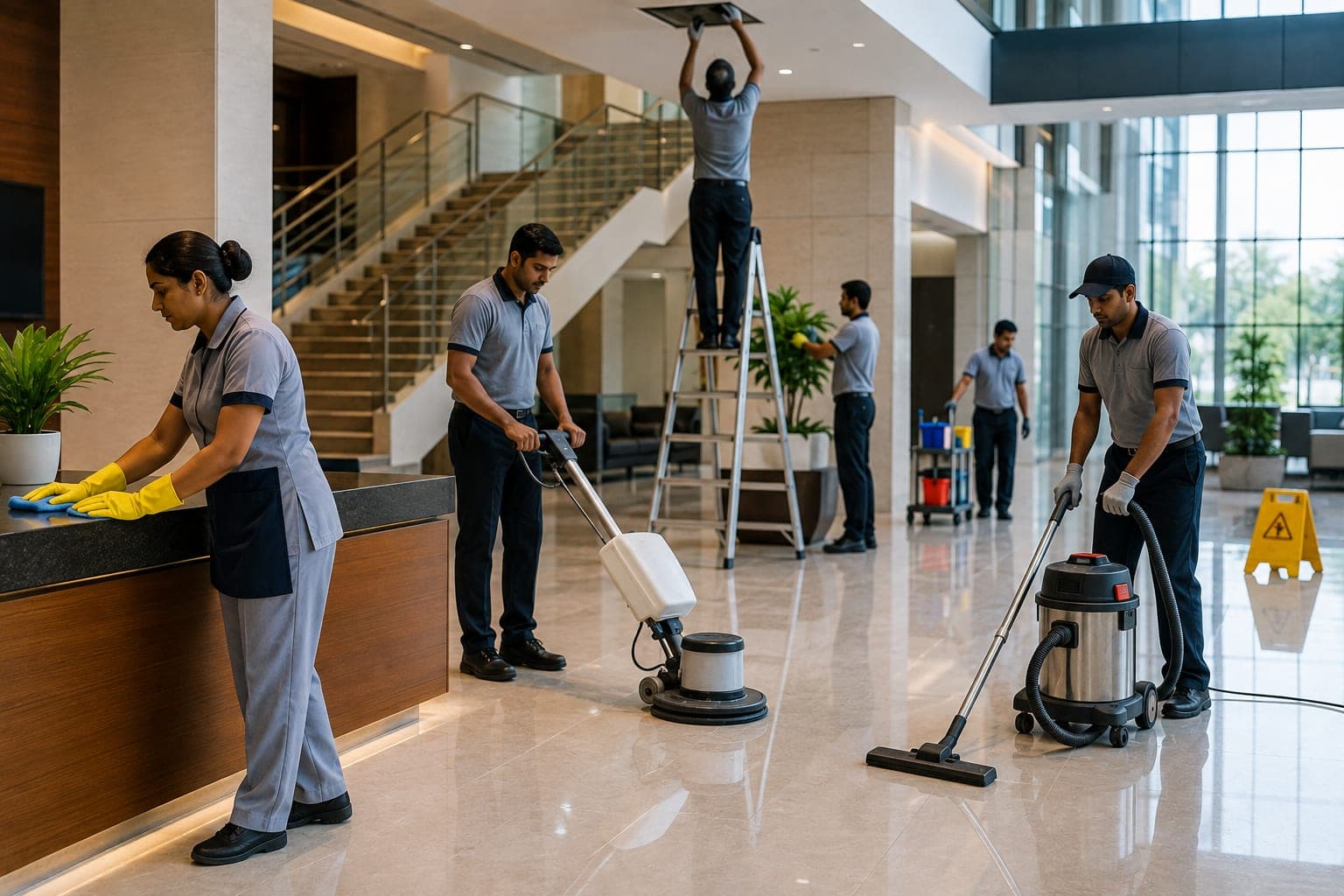
Integrated hard and soft facilities management for operational assets.
We keep buildings and industrial facilities running: the MEP systems that make them habitable, and the daily services that keep them clean, presentable and compliant. One provider, one reporting line, measurable service levels.
Facilities management is the operation and upkeep of a built asset after handover. It splits into hard FM — the engineering services that keep the building functioning, such as HVAC, electrical, plumbing and fabric maintenance — and soft FM, the occupant-facing services such as cleaning, waste handling, landscaping and pest control. Integrated FM places both under one contract with a single service level and one reporting line.
A building's construction cost is paid once; its operating cost is paid every year for decades, and it is the larger number. Deferred maintenance does not remove that cost, it defers and inflates it — a chiller that fails because filters were not changed costs many times the maintenance that was skipped. Structured FM converts unpredictable failure spend into planned expenditure, and produces the maintenance records that authorities and insurers ask for after an incident.
HVAC, lighting and cleaning regimes tuned to occupancy patterns and tenant service expectations.
Plant utilities, workshop upkeep and industrial housekeeping where cleanliness affects production quality.
Infection-control cleaning protocols, clinical waste segregation and uninterrupted essential services.
Term-time scheduling, safeguarding-aware access and rapid turnaround during vacation windows.
Dock equipment, racking inspection, floor maintenance and high-level cleaning around live operations.
Documented service levels and compliance evidence suited to public-sector audit requirements.
Every serviceable asset is identified, tagged, located and recorded with make, model, capacity, condition and remaining life. Without this register, maintenance planning is guesswork and budget forecasts have no basis.
A PPM calendar is built from manufacturer requirements, statutory inspection intervals and criticality — not a uniform frequency applied to everything. Critical assets with no installed standby get more attention than items that can wait.
On-site teams, spares holding and a single reporting channel are established, with response and rectification times defined by fault priority. A helpdesk that logs every request is also what later reveals which assets are consuming the budget.
Engineering maintenance and occupant services run to the agreed schedule and standards — HVAC, electrical, plumbing and fabric alongside cleaning, waste, landscaping and pest control — coordinated so that disruptive work happens outside occupied hours.
Inspections that carry legal weight — fire systems, lifts, pressure equipment, water hygiene — are scheduled, executed and evidenced. The compliance file is maintained continuously so it is available when an inspector asks, not reconstructed under pressure.
Performance is reported against service levels with response times, PPM completion, reactive volumes by asset and energy consumption. Recurring faults are treated as a cause to investigate rather than a ticket to keep closing.
One provider, one service level and one invoice removes the coordination burden and the gaps between scopes where small jobs fall permanently between suppliers.
When a maintenance issue turns out to be a construction problem — a failed roof detail, a structural crack, a mis-sized system — the civil, mechanical and electrical capability to fix it is available under the same organisation.
Statutory inspection records are kept current rather than assembled when an authority asks. That distinction matters most in the situation where it is hardest to fix — after an incident.
Planned maintenance converts unpredictable breakdown spend into a budgeted programme, and the asset register supports credible lifecycle and replacement forecasting.
Technicians and housekeeping staff are recruited, trained and mobilised in-house, so competence and conduct standards are consistent and turnover is managed rather than absorbed.
Fire detection, suppression and egress provisions must be maintained and periodically tested, with records available for Civil Defence inspection. A facility's safety certificate depends on these systems being demonstrably functional, not merely installed.
Municipal requirements administered through the Ministry of Municipal and Rural Affairs and Housing cover matters such as waste handling, pest control and hygiene standards in occupied premises, and are enforced through inspection of the operating facility.
General, recyclable, hazardous and — in healthcare settings — clinical waste must be segregated and routed to licensed disposal under Saudi environmental regulation, with oversight from the National Center for Environmental Compliance. Mixing waste streams is both an environmental breach and a cost increase.
Equipment efficiency standards and building energy requirements promoted through the Saudi Energy Efficiency Center and the energy conservation provisions of the Saudi Building Code affect plant replacement decisions. Replacing like-for-like without checking current requirements can install equipment that no longer complies.
FM is labour-intensive, so Labour Law obligations apply directly: contracts and permits through Qiwa, GOSI registration, wages through the Wage Protection System, and the summer restriction on outdoor work during declared midday hours, which affects landscaping and external cleaning scheduling.
Codes and standards this discipline is routinely held to. The standards applied on any given project are those named in the contract.
Hard FM covers the engineering services that keep the building physically functioning — HVAC, electrical, plumbing, lifts and fabric maintenance. Soft FM covers occupant-facing services: cleaning, waste, landscaping, pest control and similar. Integrated FM means both are delivered under one contract, which is what removes the coordination burden from the client.
Because everything else depends on it. Maintenance frequency, spares holding, budget forecasting, lifecycle replacement planning and even the accuracy of a quotation all rest on knowing what equipment exists, where it is and what condition it is in. An FM contract priced without a register is priced on assumption, and the correction arrives later as variations.
Yes. That normally starts with a condition survey and a backlog report separating what must be corrected immediately for safety or compliance from what can be programmed over time. Taking on a neglected site without documenting its inherited condition first tends to result in the existing defects being attributed to the incoming provider.
Against agreed service levels: response and rectification times by fault priority, planned maintenance completion rate, reactive work volume broken down by asset, statutory compliance status, and energy consumption. Reactive volume by asset is the most diagnostic of these, because it identifies equipment that should be replaced rather than repeatedly repaired.
Yes — scheduling them, arranging execution, and maintaining the evidence file. This covers items such as fire system testing, lift inspection, pressure equipment examination and water hygiene, depending on what the facility contains. Keeping this file current is one of the more valuable parts of the service, because it is what stands between a facility and an enforcement problem.
Usually, yes — and often before any capital is spent. Correcting control schedules, setpoints and BMS configuration, restoring maintenance on heat exchange surfaces and filters, and eliminating simultaneous heating and cooling typically recover consumption that drifted over time. Equipment replacement comes after that, once the baseline is genuinely understood.
Yes. Housekeeping and technical staff are recruited, trained, documented and paid through the company's own employment and payroll arrangements, including GOSI registration and wages through the Wage Protection System. That is both a compliance position and the reason service standards can be held consistent.
Yes. Cleaning alone, hard services alone, or a single discipline such as HVAC maintenance can all be contracted separately. The integrated model is recommended where coordination overhead and scope gaps are the actual problem, not as a condition of engagement.
Facilities & Support Services
Sourcing, mobilisation and full sponsorship management of skilled and general manpower.
View details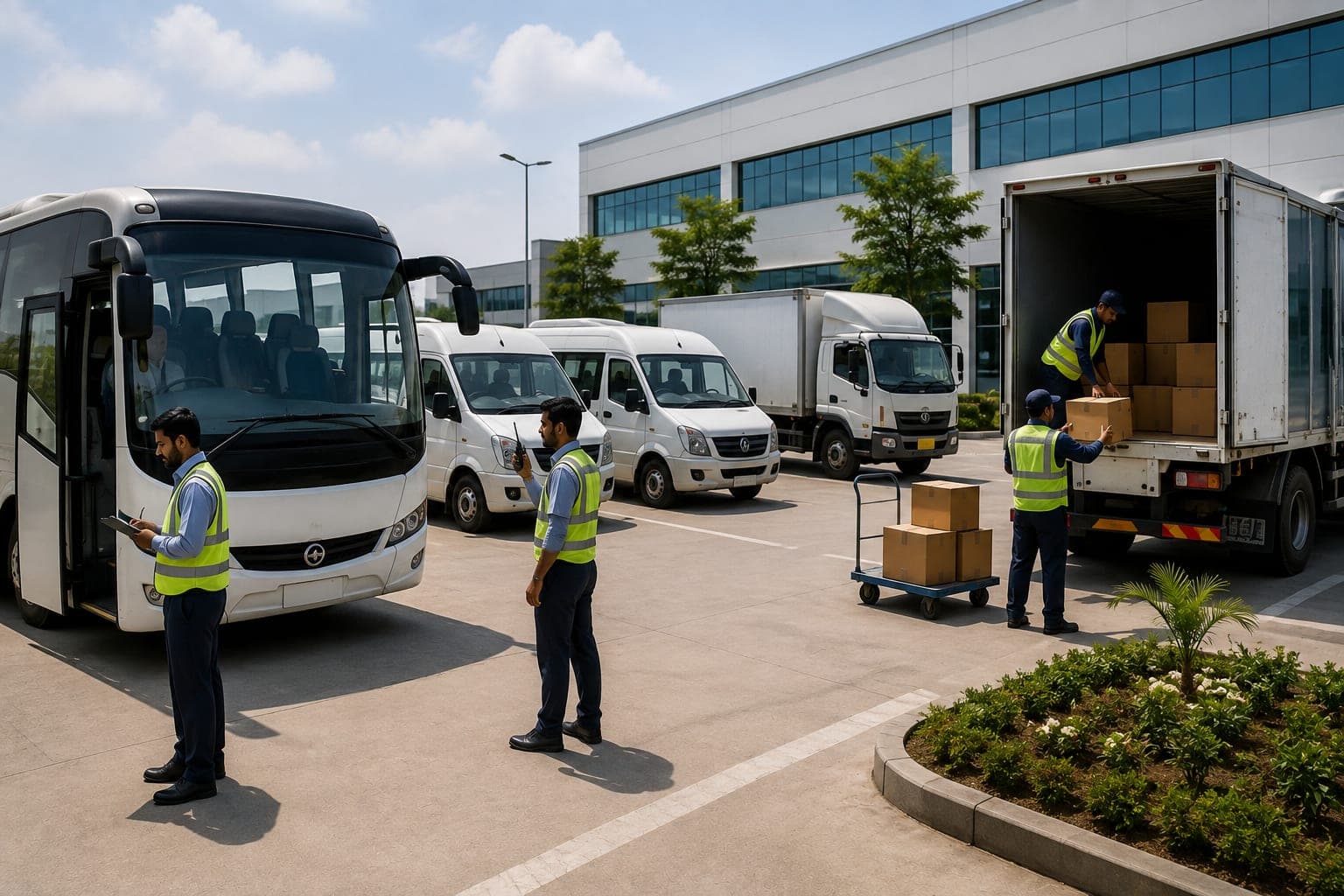
Facilities & Support Services
Passenger, staff and cargo transport with managed, maintained and tracked fleets.
View details
Facilities & Support Services
Industrial catering, camp accommodation and hospitality support under food-safety controls.
View details