
Facilities & Support Services
Facilities Management & Housekeeping Services
Integrated hard and soft facilities management for operational assets.
View details
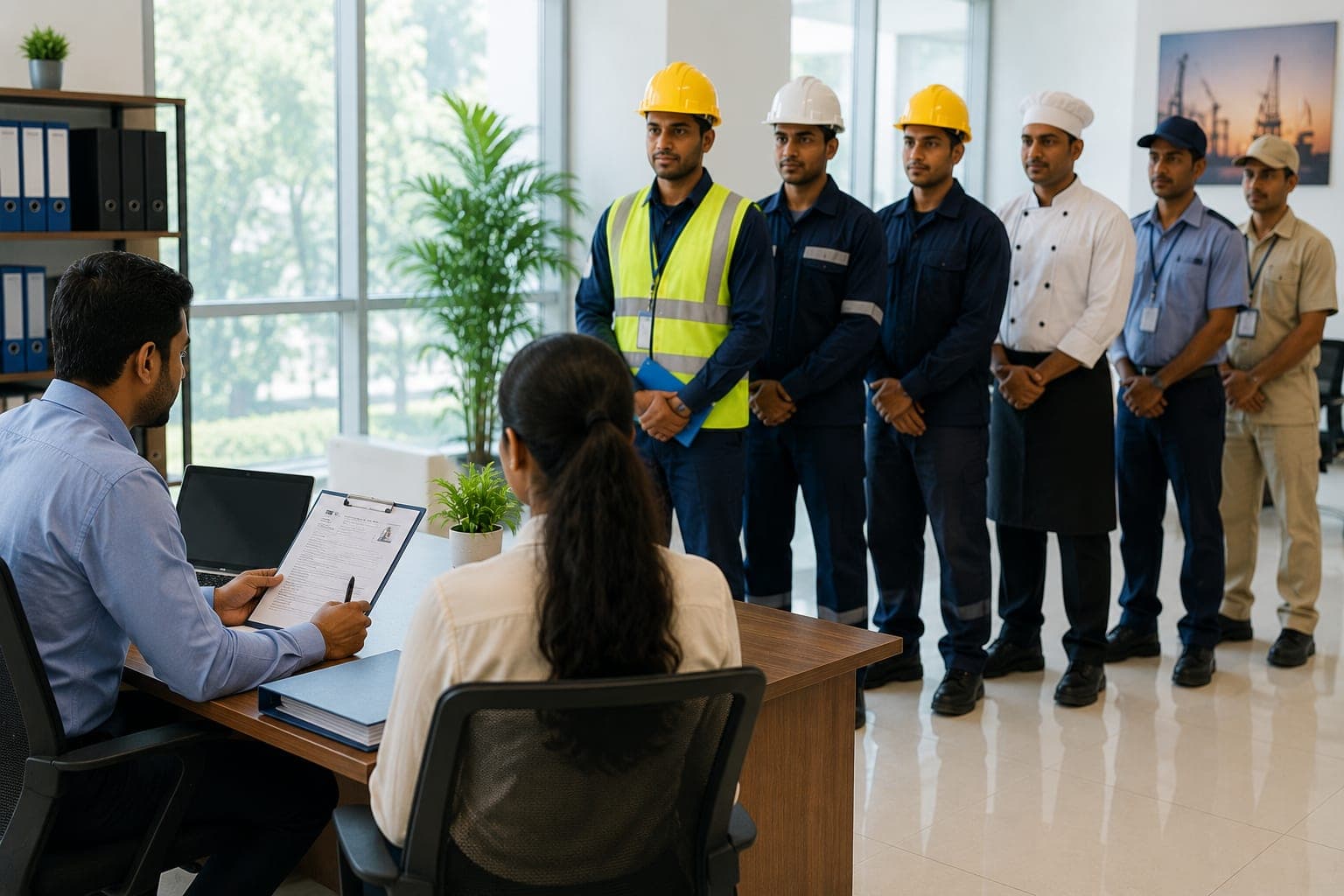
Sourcing, mobilisation and full sponsorship management of skilled and general manpower.
We supply manpower on short-term, long-term and project-duration terms, and we carry the administrative load that comes with it — recruitment, mobilisation, visas, payroll and compliance — so the client manages the work, not the paperwork.
Manpower supply is the provision of trained, documented personnel who work under a client's operational direction while remaining employed, sponsored, paid and insured by the supplying company. The supplier carries the recruitment, visa and iqama processing, payroll, GOSI registration, accommodation, transport and statutory compliance; the client directs the work. It is distinct from subcontracting, where the contractor is responsible for delivering a defined scope rather than supplying people.
Workforce demand on projects is not flat — it peaks sharply during construction and turnaround windows and falls away afterwards. Carrying that peak as permanent headcount is expensive; meeting it through informal arrangements is a regulatory exposure. Manpower supply exists to absorb the peak lawfully, with the employment obligations sitting where they can actually be discharged. Getting this wrong is not merely a commercial error: unlicensed labour provision carries real penalties for the client as well as the supplier.
Turnaround manning peaks requiring certified welders, fitters, riggers and scaffolders mobilised for a fixed window.
Civil trades, steel fixers, carpenters and general labour scaled to the construction programme.
Production operators, machine technicians and maintenance staff covering shift patterns and seasonal demand.
Licensed clinical and support staff placed against facility staffing requirements and professional registration.
Licensed drivers, warehouse operatives and equipment operators for distribution and site logistics.
Technicians, cleaners, security and administrative staff supporting building operations.
Trade, grade, certification, language, duration, shift pattern and site conditions are agreed in writing before sourcing begins. Vague requisitions — 'ten technicians' — are the root cause of most mobilisation disputes, because acceptance criteria were never defined.
Candidates are sourced domestically and through licensed overseas recruitment channels, then verified: trade testing where applicable, certificate authentication, medical fitness and reference checks. Verification happens before mobilisation, not after a candidate has failed on site.
Visas, iqama, work permits, GOSI registration and the employment contract are completed through the official channels before deployment. Site-specific requirements — plant induction, security clearance, safety passport — are arranged so that personnel can start productive work on arrival rather than waiting for access.
Housing, catering, transport to site and medical cover are provided to the standard required. On remote sites this is not a benefit but a precondition of the work, and it is planned into the mobilisation rather than assumed to be locally available.
Wages are paid through the Wage Protection System on schedule, GOSI contributions are maintained, working hours and overtime are recorded against the Labour Law, and end-of-service entitlements accrue correctly. The client sees a service invoice; the employment obligations sit with the supplier.
Performance is reviewed against the agreed requirement, with a defined replacement route and timeframe when someone is not suitable. A supply arrangement without an agreed replacement mechanism tends to leave the client managing a problem they cannot resolve.
Sponsorship, work permits, wage protection, GOSI and end-of-service liabilities remain with the employing company. The client obtains capacity without acquiring the employment exposure that comes with direct hire.
Sourcing, testing, visa processing and mobilisation take time that a project peak rarely has. A supplier already holding quota and a candidate pipeline compresses that lead time materially.
Trade testing and certificate authentication happen before deployment. A welder arriving with a qualification that has been verified against the procedure is a different proposition from one arriving with a certificate.
Numbers can be increased for a peak and released afterwards without redundancy exposure, which is the entire reason the arrangement exists.
Personnel are drawn from the same disciplines the company deploys on its own contracts, and are inducted to the same safety standard — rather than sourced from a broker with no operational involvement in the work.
| Criterion | Split discipline packages | Single accountable contract |
|---|---|---|
| Employment liability | Carried by the client in full | Carried by the supplying company |
| Time to deploy | Full recruitment and visa cycle each time | Draws on existing quota and candidate pipeline |
| Releasing capacity | Termination cost and end-of-service exposure | Demobilised at the end of the agreed term |
| Suitability risk | Client absorbs a poor hire | Replacement under an agreed mechanism |
Employment in the Kingdom is governed by the Saudi Labour Law under MHRSD, covering contracts, working hours, overtime, leave, termination and end-of-service benefits. Labour contracts and work permits are transacted through the Qiwa platform, which is where the employment relationship is formally recorded.
Providing workers to another establishment is regulated. The Ajeer programme is the mechanism by which an establishment may lawfully second its employees to work at another entity, with the arrangement registered rather than informal. Using workers outside a recognised framework exposes both the supplying and the receiving establishment to penalties.
Establishments are assessed on the proportion of Saudi nationals employed, with their Nitaqat band determining access to visas, work permit renewals and government services. Because the band is calculated at establishment level, workforce structure decisions have consequences well beyond the individual role being filled.
Wages must be paid through the Wage Protection System, which reconciles payments against registered contracts and flags underpayment or delay. Employees must be registered with the General Organization for Social Insurance, with contributions maintained for the duration of employment.
Outdoor work under direct sun is prohibited during the declared midday hours in the summer period each year. Accommodation, transport and welfare provision are subject to inspection, and site programmes that assume a full outdoor working day through summer are planning for hours that cannot lawfully be worked.
Codes and standards this discipline is routinely held to. The standards applied on any given project are those named in the contract.
The supplying company. It holds the employment contract, sponsors the work permit and iqama, pays wages through the Wage Protection System, maintains GOSI registration and carries end-of-service liability. The client directs the day-to-day work but does not become the employer, which is precisely why the arrangement has to sit inside a recognised regulatory framework.
In manpower supply the client directs the work and the supplier provides people; accountability for the output stays with the client. In subcontracting the contractor is accountable for delivering a defined scope to a specification, and decides how to resource it. Choosing the wrong model is a common source of dispute, because the parties disagree afterwards about who owned the result.
It depends entirely on whether candidates are already in the Kingdom and documented. Transferring or deploying available personnel is comparatively quick; overseas recruitment involves sourcing, testing, visa issuance, travel and medicals, and takes considerably longer. The honest answer to any specific request depends on trade, grade and volume, so it is given against a named requirement rather than as a general promise.
Yes. Trade testing is applied where the role warrants it, certificates are authenticated, and for roles such as welding the qualification is checked against the procedure the work will actually be performed to. Verifying on arrival means the cost of a mismatch has already been incurred.
A replacement route and timeframe are agreed in the contract before mobilisation. Performance concerns are raised in writing against the original requirement, and a replacement is provided within the agreed period. Without that mechanism written down, the client is left carrying a problem the supplier has no obligation to solve.
It can be, and on remote industrial sites it normally must be. Housing, catering, transport to and from site and medical cover are quoted explicitly rather than left ambiguous, because they are a material part of the cost and a condition of lawful working conditions rather than an optional extra.
Because supplied personnel remain employed by the supplier, they sit on the supplier's establishment file rather than the client's. How any particular arrangement is reflected for Nitaqat purposes depends on the framework used and the current rules, so it is worth confirming the position for a specific case rather than assuming a general answer.
Yes. Recruitment covers Saudi nationals across trades, technical and administrative roles, and training and development for national staff is delivered through the education and training service lines.
Facilities & Support Services
Integrated hard and soft facilities management for operational assets.
View details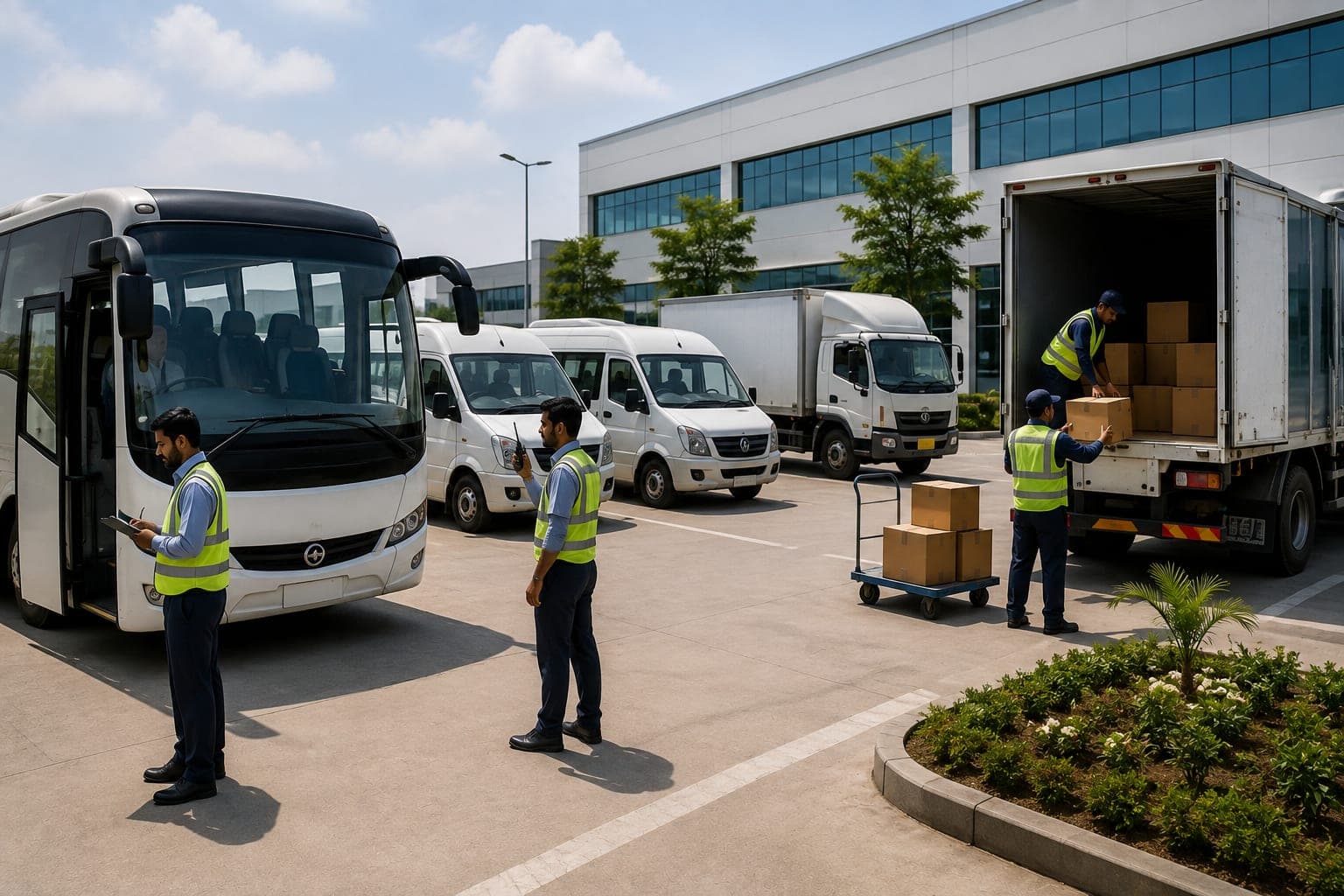
Facilities & Support Services
Passenger, staff and cargo transport with managed, maintained and tracked fleets.
View details
Facilities & Support Services
Industrial catering, camp accommodation and hospitality support under food-safety controls.
View details