Facilities & Support Services
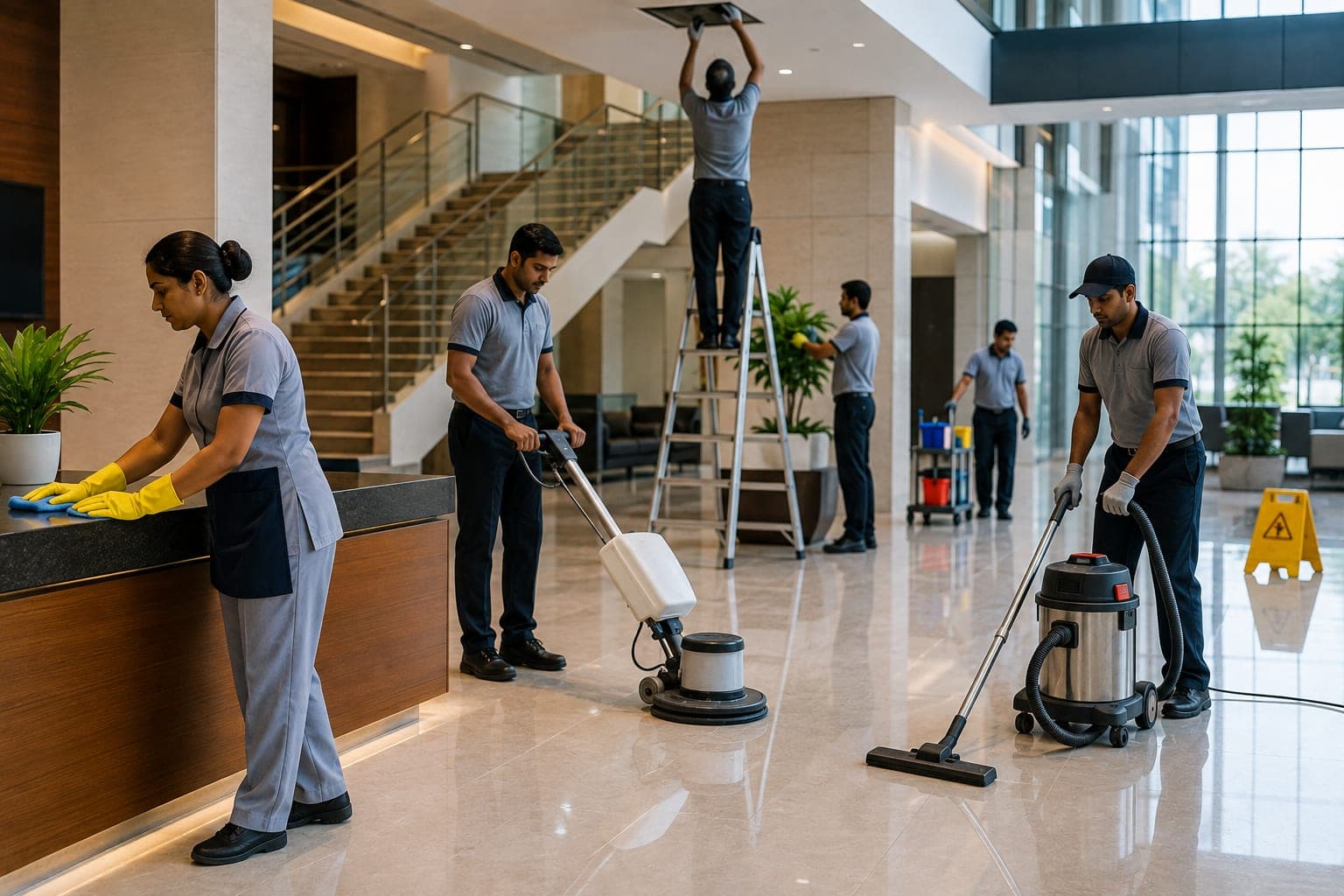
Facilities Management & Housekeeping Services
Integrated hard and soft facilities management for operational assets.
View details
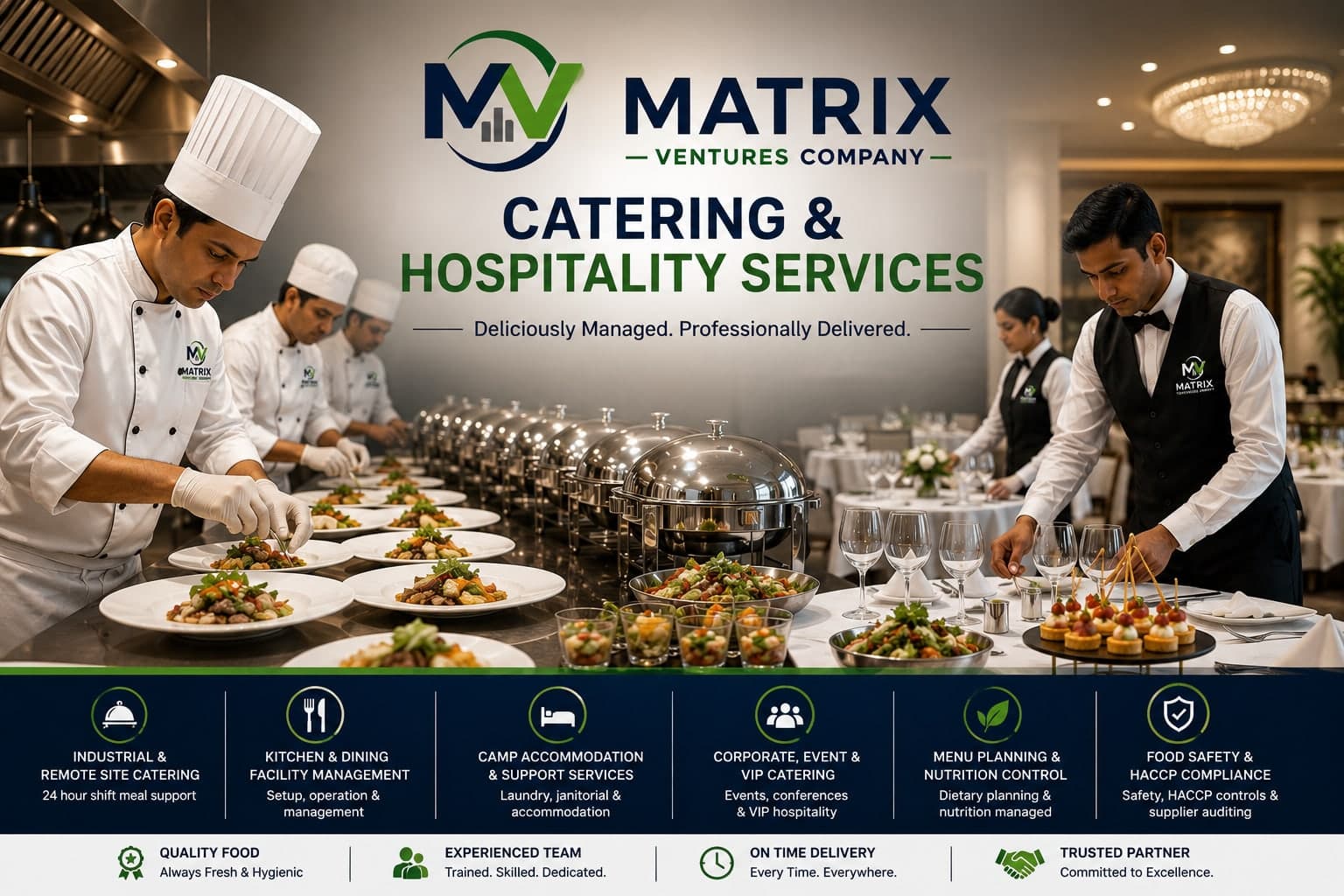
Industrial catering, camp accommodation and hospitality support under food-safety controls.
Catering at industrial scale is a food-safety discipline before it is a culinary one. We run kitchens, dining facilities and accommodation camps under documented hygiene controls, with menus built for the shift patterns and nutritional needs of the workforce.
Industrial catering is the provision of food services to a workforce at its place of work, including remote sites and around-the-clock shift patterns. It covers kitchen and dining facility setup and operation, menu planning against nutritional and dietary requirements, food-safety management, and — on camp-based projects — the accommodation, laundry and janitorial services that make a remote workforce sustainable. It differs from commercial restaurant catering in that the same population eats every meal, every day, for the duration of a project.
Two things make industrial catering different from ordinary food service, and both raise the stakes. First, the same population eats the same kitchen's output three times a day for months — so a food-safety failure does not affect a handful of customers, it can remove a significant share of the workforce from a site simultaneously. Second, on remote projects there is no alternative supply; if the kitchen fails, there is nowhere else to eat. Food safety on these projects is a business continuity control, not a hygiene formality.
Round-the-clock messing during turnarounds, when headcount multiplies for a few weeks and night shifts must be fed on site.
Site canteens and camp messing for large labour forces, often at locations with no local supply.
Full camp operation — catering, accommodation, laundry and janitorial — where the site is the only settlement.
Permanent staff canteens serving shift patterns within fixed break windows and fixed seating capacity.
Staff catering alongside therapeutic and modified-texture diets requiring dietitian-led menu control.
Executive dining, meeting hospitality and event catering at a presentation standard distinct from volume messing.
Meal volumes are calculated against headcount, shift timings, break window length and seating capacity — not average daily numbers. A canteen sized for the daily total but not the lunch peak produces queues that eat the break rather than the meal.
Kitchen layout is designed for one-directional flow from goods-in through preparation to service, separating raw and ready-to-eat handling. Municipal and food-authority licensing is obtained before operation rather than pursued while serving.
Cycle menus are built to avoid repetition over a rotation, balanced for the physical demands of the work, and adapted for dietary, medical and cultural requirements. Menus for a workforce eating every meal on site are planned differently from a restaurant offer.
Suppliers are approved and audited, deliveries are temperature-checked on receipt, and the cold chain is monitored from delivery through storage to service. On remote sites, delivery frequency and storage capacity are planned together, because one constrains the other.
Critical control points — cooking temperatures, cooling rates, hot holding, reheating and cross-contamination separation — are monitored and recorded at each service. Retained meal samples are kept so that any suspected incident can be investigated rather than debated.
Where camp services are in scope, accommodation cleaning, laundry and waste handling run to a documented schedule. Internal audits and workforce feedback are reviewed regularly, since standards in a captive-population catering operation drift quietly if nobody is measuring.
HACCP controls, retained samples and supplier auditing are operated because a foodborne incident on a remote project removes workforce from a site, not because an inspector might visit.
Supply chain, storage capacity, water quality and waste disposal are planned for locations where nothing can be bought locally and a missed delivery has no fallback.
Messing, accommodation, laundry and janitorial under one contract removes the interface between the party feeding the workforce and the party housing it — a common source of dispute on camp projects.
Serving lines, seating and kitchen output are sized against the break window and shift-change peak, so the workforce actually gets a rest break rather than spending it queueing.
Temperature logs, health certificates, supplier approvals and cleaning schedules are maintained continuously, which is what an inspection or a client audit actually examines.
Food establishments in the Kingdom operate under SFDA regulation covering food safety, hygiene requirements, labelling and the conditions under which food may be prepared and served. Requirements apply to storage, handling, temperature control and traceability of what was served and when.
Hazard Analysis and Critical Control Points is the recognised basis for food safety management and is expected of food establishments rather than treated as an optional accreditation. In practice this means identified critical control points, monitored limits, recorded checks, corrective actions and verification.
A food establishment licence is issued through the municipality, and every food handler requires a valid health certificate obtained after medical screening. Both are inspected, and an expired handler certificate is among the most common findings at a routine visit.
Meat and meat products must meet halal requirements, with certification traceable through the supply chain. Imported food products are additionally subject to Saudi conformity requirements, so supplier approval covers documentation as well as product quality.
Where camp accommodation is provided, labour housing is subject to requirements on occupancy density, sanitation, ventilation, cooling and welfare facilities, and is inspected under Ministry of Human Resources and Social Development oversight. Catering and accommodation are frequently inspected together.
Codes and standards this discipline is routinely held to. The standards applied on any given project are those named in the contract.
Yes — this is the more demanding case and it is planned differently. Delivery frequency, cold and dry storage capacity, water quality and waste disposal are designed together, with buffer stock sized so that a delayed delivery does not interrupt service. Storage capacity is usually the binding constraint, not supplier availability.
Through records generated at the time: delivery temperature checks, storage temperature logs, cooking and reheating temperatures, cooling times, cleaning schedules signed off, supplier approval files, staff health certificates and retained meal samples. If illness is ever alleged, this record set is what allows the question to be answered rather than argued.
Yes. Menus accommodate medical diets such as diabetic and low-sodium, allergen avoidance, and cultural and religious requirements. On a workforce eating every meal on site, these are not occasional special requests — they are a standing part of daily production and are planned into the cycle menu.
Yes. Night and early-morning messing is standard on shift operations and turnarounds. Night shifts are catered as a proper meal service rather than a packed snack, since fatigue management and nutrition are directly connected on extended shift patterns.
Yes, usually beginning with a hygiene and capacity assessment: kitchen flow and cross-contamination risk, equipment condition, storage adequacy, licensing and certificate status, and whether service capacity matches the break window. Recording the inherited condition first matters, so pre-existing problems are not attributed to the incoming operator.
They can be. Camp accommodation management, laundry and janitorial services are available alongside catering, which is normally preferable on camp projects because welfare provision is inspected as a whole and splitting it across contractors creates gaps nobody owns.
Through a cycle menu long enough to avoid noticeable repetition, seasonal variation, and structured workforce feedback rather than waiting for complaints to escalate. Catering quality on a long project degrades gradually and is rarely reported early, so it is measured deliberately.
Facilities & Support Services
Integrated hard and soft facilities management for operational assets.
View details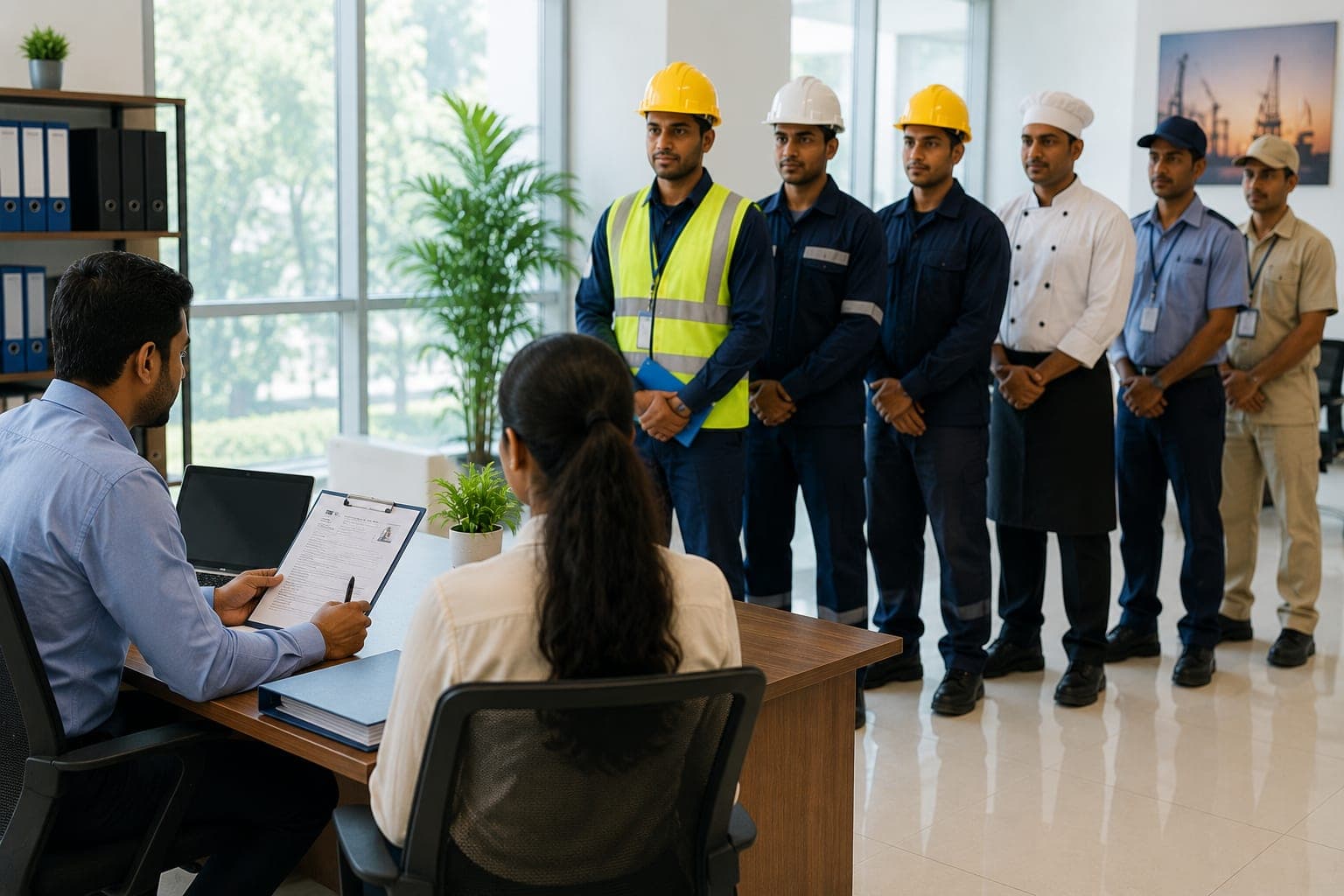
Facilities & Support Services
Sourcing, mobilisation and full sponsorship management of skilled and general manpower.
View details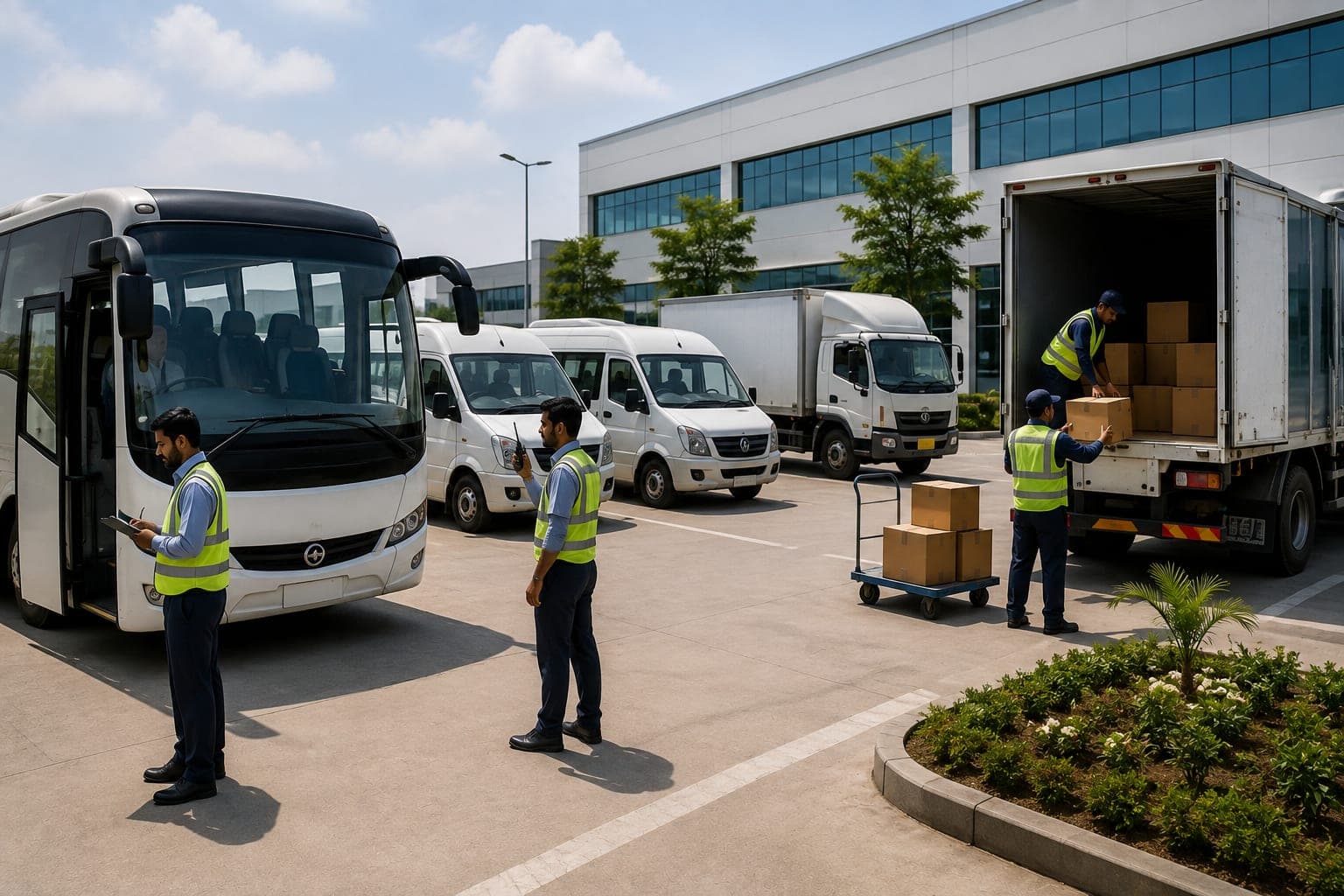
Facilities & Support Services
Passenger, staff and cargo transport with managed, maintained and tracked fleets.
View details