Education & Training
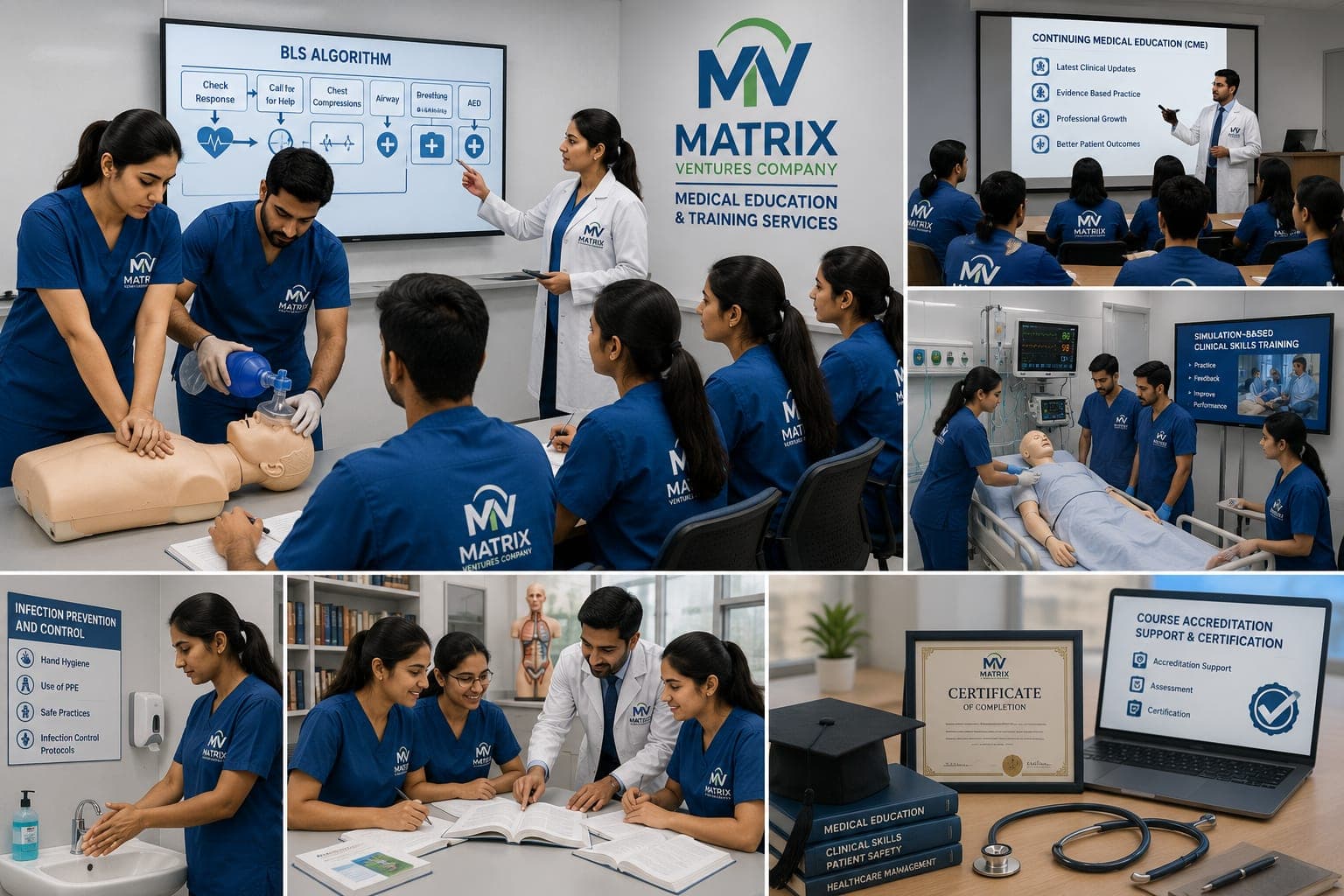
Medical Education & Training Services
Accredited clinical training, continuing medical education and simulation-based programmes.
View details
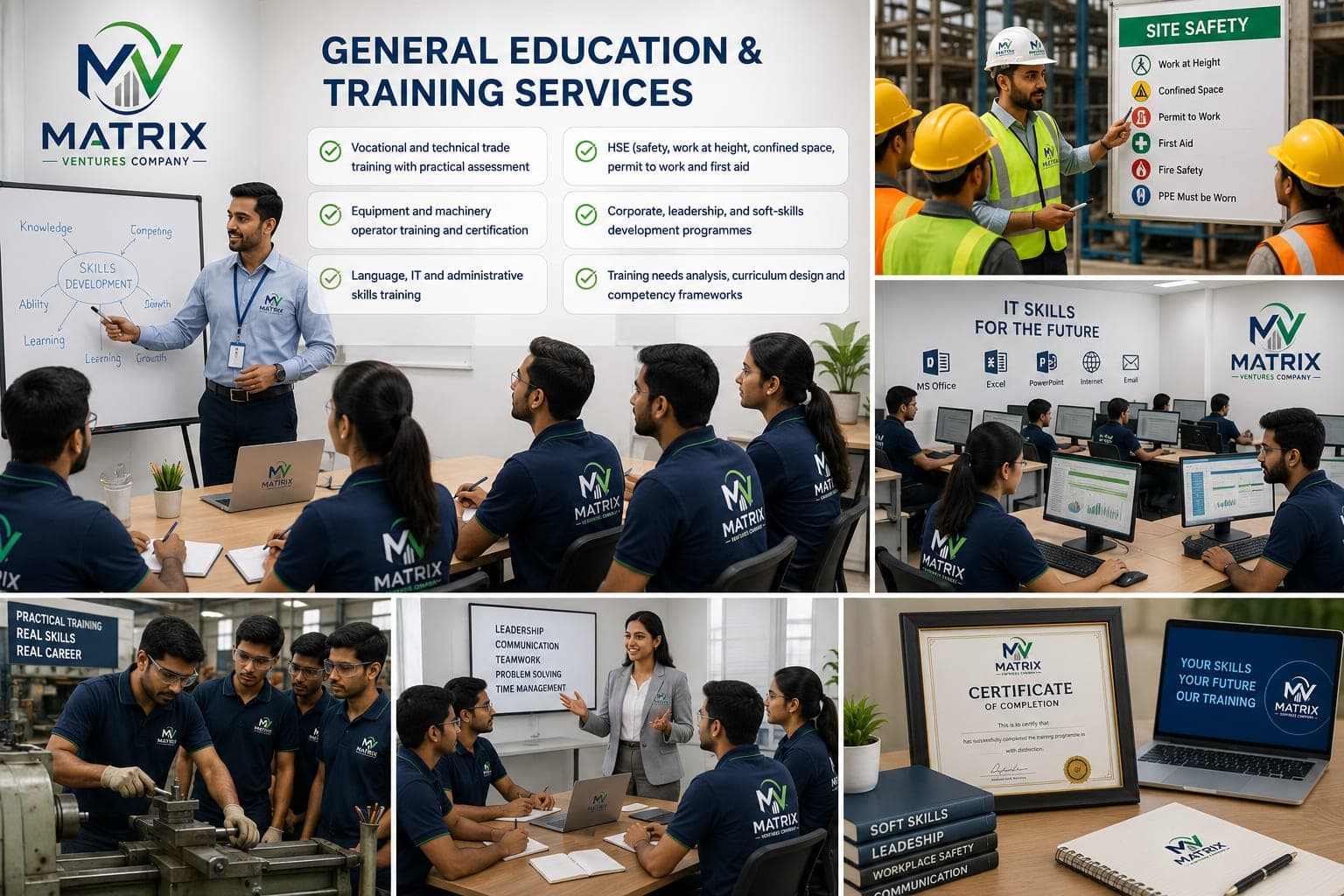
Vocational, technical, HSE and corporate training with assessment and certification.
We build and deliver training programmes that produce a measurable capability — trade skills that can be assessed on a workshop floor, safety competencies that satisfy an auditor, and corporate programmes tied to defined learning outcomes.
Vocational and corporate training is the structured development of capability that can be demonstrated rather than merely attended: trade skills assessed on a workshop floor, HSE competencies that satisfy an auditor, equipment operator certification, and corporate and leadership development. The distinguishing feature of competence-based training is that it ends in an assessment against defined criteria — a delegate either can perform the task or cannot, and the record says which.
On an industrial site, competence is not a development topic — it is a safety control. A permit-to-work system assumes the person receiving the permit understands the isolation; a lifting plan assumes the slinger can judge a load. When that assumption is wrong, the control fails silently and nobody discovers it until an incident. Assessed competence is what converts an assumption into a verified fact, and it is why client audits ask for training records rather than training plans.
Permit-to-work, confined space, gas testing and work-at-height competence assessed to client standards.
Trade skills, scaffolding, rigging and lifting competence with practical assessment before deployment.
Machine operator certification, lockout-tagout competence and process-specific technical training.
Forklift and materials handling certification, load securing and defensive driving programmes.
Leadership, supervisory, language, IT and administrative skills development for office-based teams.
Structured vocational pathways and competency frameworks supporting national workforce development.
The gap is established from job requirements, incident and audit findings, client contractual obligations and observed performance — not from a course catalogue. Training that begins with an available course rather than an identified gap tends to fill seats without changing capability.
Each role is broken into the competencies it actually requires, and the curriculum, practical content and assessment method are built against those. Assessment criteria are written before the course is delivered, so the standard is fixed rather than adjusted to the cohort.
Theory is delivered in the classroom but trade and operator skills are developed on the equipment, in the workshop or on a practical rig. Bilingual delivery is used where the workforce requires it, since a safety-critical instruction understood approximately is not understood.
Delegates are assessed performing the task under observation against the written criteria. For trades and equipment operation this means demonstrating on the machine or the workpiece, because a written test can confirm knowledge but cannot confirm skill.
Certificates are issued with the competencies assessed, the award date and, where applicable, an expiry date, and a training matrix is supplied to the employer showing coverage by role. This matrix is what a client audit examines.
Refresher intervals are scheduled ahead of expiry, and effectiveness is evaluated by whether on-site performance actually changed — incident rates, observation findings, supervisor feedback — rather than by delegate satisfaction scores alone.
A certificate is issued because a delegate demonstrated the task, not because they sat through it. That is the difference between a training record and a compliance decoration.
Trade and HSE training is delivered by people from the same organisation that executes construction, maintenance and industrial scopes, so the content reflects how the work is actually done rather than a generic syllabus.
Training is delivered in Arabic or English according to the audience. On safety-critical content this is not a convenience — an instruction understood approximately has not been understood.
Courses can be run at the client's site, on the machines the delegates actually operate and within the procedures they actually work to, which transfers far better than training on unfamiliar equipment elsewhere.
Coverage and expiry are tracked by role and individual, so gaps are visible before a client audit or a site access refusal makes them visible.
| Criterion | Split discipline packages | Single accountable contract |
|---|---|---|
| Basis for the certificate | Hours attended | Observed performance against written criteria |
| Value to a client audit | Shows training happened, not that it worked | Evidences competence per person and per task |
| Equipment certification | Generic certificate covering no specific machine | Assessed on the machine actually operated |
| Measuring success | Delegate satisfaction scores | Changed site performance and incident trends |
Private technical and vocational training provision in the Kingdom operates under the licensing and oversight framework of the Technical and Vocational Training Corporation, which governs how training institutes are established and what they may deliver. Programme recognition matters where a certificate is expected to carry weight beyond the issuing employer.
Training and employment of Saudi nationals is supported through the Human Resources Development Fund, which operates programmes contributing to training and wage support for qualifying activity. Because eligibility conditions attach to how a programme is structured and registered, this is worth establishing before training is delivered rather than after.
The Labour Law and its occupational safety and health provisions place a duty on employers to ensure workers are informed of hazards and competent for the work assigned. In practice, competence is evidenced through training and assessment records, which is what an inspection or an incident investigation will request.
Major operators and industrial facilities impose their own competence requirements for site access — permit-to-work roles, confined space entry, gas testing, work at height, and equipment operation. These frequently exceed the general legal minimum and are a condition of mobilisation rather than a preference.
Operating lifting equipment, forklifts, aerial platforms and similar plant requires demonstrated competence for the specific machine type, typically with periodic revalidation. A general certificate does not cover a machine the operator has not been assessed on, which is a common gap found during site audits.
Codes and standards this discipline is routinely held to. The standards applied on any given project are those named in the contract.
The assessment. Competency-based training defines in advance what a delegate must be able to do, then observes them doing it and records whether they met the criteria. A course that ends in a certificate for attendance tells an employer that someone was in the room; a competency assessment tells them whether that person can do the job.
Yes, and for trades and equipment operation it is usually better. Assessing an operator on the actual machine, within the actual procedures and site conditions, produces a far more meaningful result than certification on unfamiliar equipment at a training centre, where the transfer back to the workplace is left to chance.
Yes — Arabic or English according to the audience, and bilingual where a mixed workforce requires it. For safety-critical content this is treated as a requirement rather than a preference: an instruction that is only partially understood has not been delivered, however well the course was designed.
That depends on the client, and it is worth confirming before booking. Major operators typically specify which competencies they require and sometimes which awarding bodies they accept for site access. Programmes are aligned to the requirement identified for the specific site rather than assumed to be universally accepted.
By what changed at the workplace: observation findings, incident and near-miss trends, supervisor feedback and repeat assessment. Delegate satisfaction scores are collected but are a weak indicator — people frequently enjoy training that did not change how they work, and occasionally dislike training that did.
Yes — breaking each role into required competencies, defining assessment criteria, mapping current coverage against a training matrix, and identifying the gaps. This is often more valuable than delivering courses, because it establishes what actually needs training rather than what happens to be available.
Because a certificate records what someone was assessed on, somewhere, at some point — not what they can do today on your equipment to your procedures. Certificates vary widely in the rigour behind them, some cannot be authenticated, and skills fade with time out of the trade. A short practical verification before deployment costs very little and is the only reliable way to know what has actually arrived on site.
Yes, and this is where structured vocational pathways matter most. Developing Saudi nationals into skilled trades and technical roles requires a defined progression — entry training, supervised practice, assessment, and a route to higher competence — rather than a single course. Support programmes administered through the Human Resources Development Fund can contribute to qualifying activity, but eligibility depends on how the programme is structured, so that is worth establishing before delivery begins.